
How Do You Start a Private Label Luggage Brand? A Step-by-Step Guide for Importers and Retailers
Launching a private label luggage brand has become one of the most effective ways for retailers, distributors, and eCommerce businesses to build long-term value instead of competing solely on price. As global travel continues to recover and consumers demand luggage that combines durability, style, and functionality, private label products provide businesses with an opportunity to create unique collections while improving profit margins.
Unlike reselling generic wholesale travel gear, private label luggage allows you to customize product design, branding, packaging, and features to better match your target market. Whether you sell through Amazon, your own online store, supermarkets, or retail chains, partnering with the right luggage manufacturer is the foundation of a successful launch.
This guide walks you through every stage of building a private label luggage brand—from market research to production and quality control—helping you avoid common mistakes while creating products your customers will trust.
What Is Private Label Luggage?
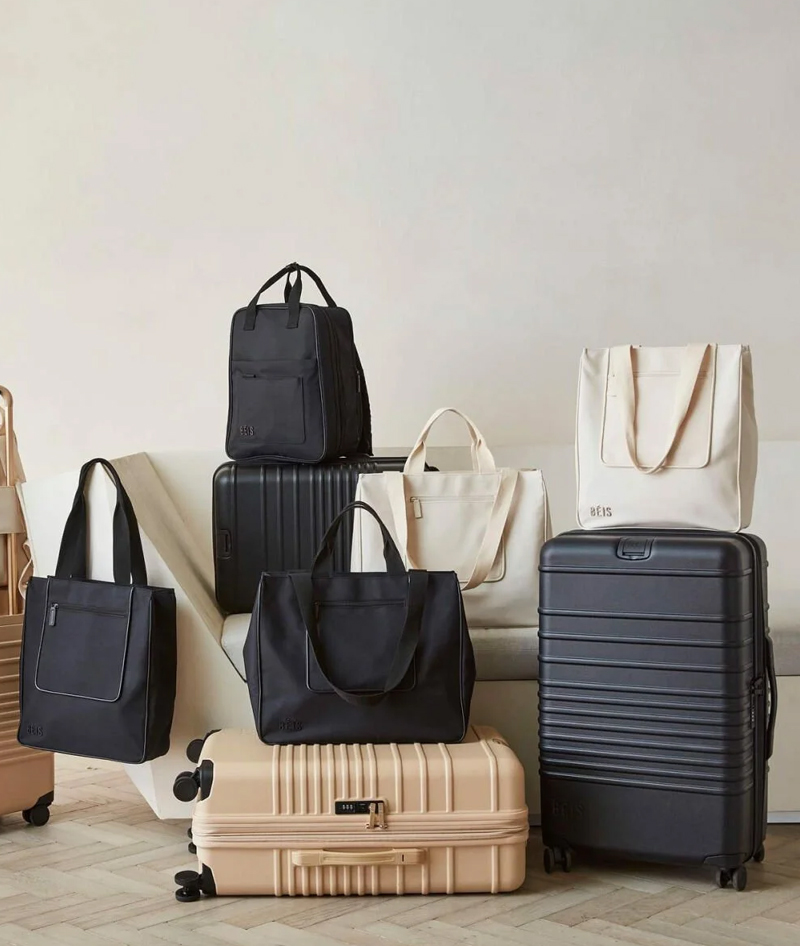
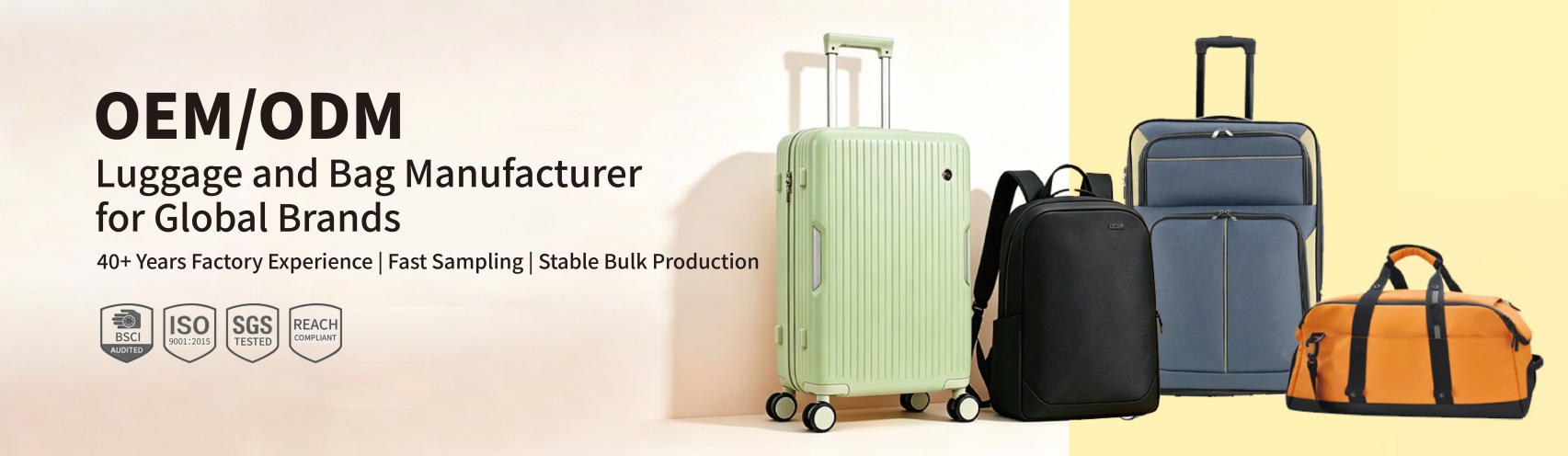
Private label luggage refers to suitcases, travel bags, backpacks, and related travel accessories manufactured by a factory but sold under your own brand name. Instead of investing in your own production facility, you work with an experienced OEM (Original Equipment Manufacturer) or ODM (Original Design Manufacturer) luggage manufacturer that produces products according to your specifications.
In the luggage industry, private labeling generally falls into two categories:
- ODM (White Label Customization): Selecting existing, pre-tested factory molds and customizing cosmetic elements (colors, logos, hardware finish). This offers lower minimum order quantities (MOQs) and faster time-to-market.
- OEM (Full Custom Development): Developing proprietary shell designs via custom injection or vacuum-forming molds. This requires higher upfront tooling capital but creates an exclusive product moat.
Typical customization options include:
- Logo printing, embossing, or premium metal nameplates
- Custom shell colors (Pantone matching) and unique surface textures (e.g., anti-scratch matte, carbon fiber finish)
- Ergonomic telescopic handles and multi-directional silent spinner wheels
- Bespoke interior linings (R-PET fabric, mesh dividers, wet/dry separation pockets)
- TSA-approved integrated combination locks
- Custom packaging, protective dust bags, and retail hangtags
- Barcode labels (UPC/EAN) and multi-language instruction manuals
Step 1: Define Your Target Market & Pricing Architecture
Before contacting suppliers, determine exactly who your products are intended for. Different customer groups prioritize different features when sourcing wholesale travel gear, and your target demographic will dictate your Bill of Materials (BOM) cost.
- Business Travelers: Value lightweight construction, dedicated fast-access laptop compartments (front-opening designs), ultra-silent Japanese-engineered spinner wheels, and high-security TSA combination locks. They are less price-sensitive but demand flawless reliability.
- Leisure & Family Travelers: Prioritize maximum packing volume, expandable zippers (adding 20-25% more capacity), high impact resistance for checked baggage, vibrant aesthetic options, and competitive retail pricing.
- Premium/Luxury Consumers: Expect aerospace-grade polycarbonate or aluminum-magnesium alloy shells, rivet-reinforced structures, premium micro-fiber leather touchpoints, seamless aluminum frames (zipperless entry), and high-end retail unboxing experiences.
Step 2: Research Market Trends & Consumer Pain Points
Successful private label brands don't simply copy existing products—they engineered out the flaws of their competitors. Before finalizing your product brief, analyze 1-star and 2-star reviews on major eCommerce platforms to identify recurring engineering pain points.
The most common structural failures in travel gear include:
- Wheel Housing Failures: Wheels breaking off due to poor rivet reinforcement or cheap plastic casings.
- Telescopic Handle Jamming: Tubes bending or internal locking pins failing under heavy loads.
- Zipper Bursting: Standard nylon coil zippers splitting open when the bag is overpacked.
- Shell Cracking: Brittle plastics shattering in cold climates or under the rough handling of airport ground crews.
Current Technical Trends to Capitalize On:
- Eco-Friendly Engineering: Incorporating Post-Consumer Recycled (PCR) plastics or Recycled Polyethylene Terephthalate (R-PET) for interiors to target eco-conscious demographics.
- Smart Integration: Removable power bank pockets complying with FAA airline regulations, integrated digital weight scales built into the handle, and AirTag/tracker stealth pockets.
- Aesthetic Minimalism: Matte finishes with high scratch resistance and vertical linear grooving for structural integrity.
Step 3: Find and Vet the Right Luggage Manufacturer
Choosing the right manufacturing partner is the single most critical factor determining your brand’s survival. A low unit price means nothing if your defect rate exceeds 3%. When vetting factories, you must look beyond standard sales brochures.
A world-class luggage manufacturer must possess:
- Vertical Integration: Look for factories that handle sheet extrusion, vacuum/injection molding, sewing, and assembly in-house. This ensures tighter quality control and lower costs compared to factories that outsource shell production.
- Advanced In-house Testing Labs: The factory must have specialized equipment to simulate real-world luggage abuse (detailed in Step 6).
- Tier-1 Component Supply Chain: Ensure they source reliable hardware (e.g., YKK or Hinomoto components) or manufacture high-spec proprietary alternatives.
Critical Questions to Ask Potential Suppliers:
- “What is your internal AQL (Acceptable Quality Limit) standard for mass production?” (Look for AQL 1.5 or 2.5).
- “Are your factory facilities audited by third parties like BSCI, Sedex, or ISO 9001?”
- “Who owns the intellectual property and molds if we develop a custom suitcase design?”
Step 4: Deep Dive into Material Science
Material selection dictates your product’s durability, weight, retail positioning, and profit margins. Understanding the technical nuances of plastics and fabrics is non-negotiable.
Hard-Shell Luggage Polymers
- ABS (Acrylonitrile Butadiene Styrene): Rigid, highly scratch-resistant, and cheap to produce. However, it is brittle, prone to cracking in cold temperatures, and has poor impact recovery. Best suited for ultra-budget entry-level luggage.
- ABS+PC Blends: A hybrid material combining the stiffness and low cost of ABS with the flexibility of Polycarbonate. It offers a balanced middle ground for mass-market consumer brands.
- Pure PC (Polycarbonate): Highly flexible, resilient, and lightweight. When subjected to heavy impacts, PC flexes to absorb the energy and then pops back into shape without cracking. It requires higher processing temperatures and costs more, making it ideal for premium collections.
- PP (Polypropylene): The lowest density among engineering plastics, making it exceptionally lightweight. It possesses incredible fatigue resistance and impact strength, though it can be slightly more susceptible to UV degradation and cosmetic scratches. Highly favored in European markets for heavy-duty, long-lasting travel gear.
Soft-Shell & Hybrid Fabrics
- Polyester (600D to 1200D): Economical and versatile. Higher Denier (D) ratings indicate thicker, more tear-resistant weaves suitable for value-tier lines.
- Ballistic Nylon: Originally developed for military body armor. It features a basketweave pattern that provides industry-leading abrasion resistance, tensile strength, and premium texture for high-end business travel gear.
Step 5: Execute Strategic Product Customization
True private labeling goes beyond slapping a silk-screened logo onto a generic product. To insulate your brand from price wars, leverage custom engineering elements that elevate the perceived value.
- Custom Tooling & Shell Design: Working with designers to create exclusive exterior geometric patterns. These lines aren't just cosmetic; engineered ridges and arches add structural rigidity to the shell, allowing for thinner, lighter walls without sacrificing strength.
- Hardware and Accents: Specify heavy-duty, puncture-resistant double-layer zippers to prevent "pen-trick" theft. Opt for dual-caster multi-directional wheels with polyurethane (PU) treads rather than PVC, as PU ensures silent, smooth movement over rough pavements.
- Functional Ergonomics: Incorporate multi-stage aluminum telescopic handles with minimal wobble (less than 15mm of play) to ensure precise control.
Step 6: Rigorous Sampling and Stress Testing
Never authorize mass production based on digital renderings or pristine showroom samples. You must request a physical Golden Sample produced on the actual machinery intended for production and put it through destructive laboratory testing.
Ensure your custom suitcase design undergoes the following industry-standard performance metrics:
| Test Type | Protocol / Method | Quality Benchmark |
| Drop Test | Loaded to capacity (up to 25kg); dropped from 1.2 to 1.5 meters at various angles. | Zero structural cracking; wheel housings and handles must remain intact. |
| Tumble Test | Placed inside a large rotating drum with internal obstacles for 25 to 50 revolutions. | Comprehensive evaluation of seams, zippers, and structural integrity. |
| Mileage / Rolling Test | Run on a motorized treadmill or track with abrasive bumps at 4-5 km/h for 16-32 km. | Wheels must not deform, melt, or exhibit uneven wear; bearings must remain smooth. |
| Jerk / Handle Test | Telescopic and carry handles are mechanically jerked up to 5,000 times under full load. | No failure in rivets, handle brackets, or internal locking mechanisms. |
Step 7: Establish Quality Control & Global Compliance
Quality drift is a major risk in cross-border manufacturing. A professional luggage manufacturer must enforce a strict multi-stage quality management framework rather than relying purely on pre-shipment checks.
- IQC (Incoming Quality Control): Testing raw polymer pellets, zippers, fabrics, and wheel bearings before they hit the production floor.
- IPQC (In-Process Quality Control): Continuous monitoring during shell molding, stitching alignment, lining gluing, and hardware riveting.
- FQC (Final Quality Control): Operational verification of every zipper, lock, and handle on the finished product.
Regulatory Compliance
Depending on your destination market, your products must legally comply with regional consumer safety and chemical regulations:
- Europe (EU): Strict adherence to REACH compliance (restricting harmful plasticizers/phthalates and heavy metals) and RoHS where electronic components are involved.
- United States: Compliance with California Proposition 65 (clear labeling or elimination of listed carcinogens) and relevant CBP (Customs and Border Protection) packaging/marking mandates.
- Factory Governance: Ensure the manufacturing facility holds up-to-date BSCI, Sedex, or ISO 9001 certifications to satisfy the supply chain compliance audits required by large retail chains and marketplaces.
Step 8: Master Production Logistics and Supply Chain Planning
Luggage is a highly volumetric product; you are essentially shipping air. Optimizing your logistics and production timelines is critical to maintaining a healthy bottom line.
- Volumetric Optimization: Design your luggage sets (e.g., 20-inch carry-on, 24-inch medium, 28-inch large) to "nest" completely inside one another. This allows you to ship three individual products within the freight footprint of a single large suitcase, drastically cutting your per-unit shipping costs.
- Lead Time Management: Standard production cycles run between 35 to 45 days after deposit and sample confirmation. However, global shipping and peak seasonal demands (e.g., the pre-summer travel rush and Q4 holiday shopping) require you to initiate production briefs at least 4 to 6 months ahead of your target launch date.
- Incoterms Selection: Understand your financial risk boundaries. While FOB (Free on Board) is the industry standard for experienced importers, newer eCommerce brands may opt for DDP (Delivered Duty Paid) to simplify customs clearance and domestic delivery.
Common Mistakes to Avoid
- Chasing the Absolute Lowest Unit Cost: Lower costs are almost always achieved by mixing recycled, low-grade scrap plastic into virgin resin, resulting in brittle shells that shatter during their first flight.
- Neglecting Packaging Engineering: High-quality boxes with proper edge protectors and polybags are required to prevent scuffing and crushing during maritime transport and last-mile delivery.
- Failing to Verify Real-World Moat Ownership: Ensure your contract explicitly states that custom mold investments remain your exclusive intellectual property to prevent the factory from selling your proprietary design to competitors.
Frequently Asked Questions
What is the realistic capital requirement to launch a private label luggage brand?
If you utilize ODM (existing factory molds) with basic logo and color customization, initial production runs can range from $5,000 to $15,000 depending on materials. However, if you require a completely unique custom suitcase design via proprietary injection molds, tooling costs alone can range from $8,000 to over $25,000 per mold size.
How do factory MOQs function for custom travel gear?
For standard fabric or hard-shell configurations using stock colors, MOQs typically range from 200 to 500 units per size/color. If you require custom Pantone-matched plastic sheets or bespoke interior fabric prints, raw material sub-suppliers may push the factory’s required MOQ to 1,000+ units.
Can hard-shell and soft-shell luggage lines be manufactured in the same facility?
While some massive conglomerates do both, many top-tier factories specialize. Hard-shell manufacturing relies heavily on heavy machinery, automation, and polymer engineering. Soft-shell production is labor-intensive, requiring advanced textile sewing lines. Partnering with a specialist factory generally yields better quality and innovation within that specific product category.
Build Your Brand with Zabaggo
Launching a successful private label luggage brand requires more than finding a factory—it requires a strategic manufacturing partner that understands polymer engineering, supply chain compliance, and long-term brand growth.
At Zabaggo, we help global importers, wholesalers, retailers, and high-growth eCommerce brands transform conceptual designs into market-ready, high-margin luggage collections. With decades of manufacturing expertise, our vertically integrated facilities provide comprehensive OEM and ODM solutions—encompassing custom mold development, advanced material formulation, rigorous lab testing, and optimized global logistics.
Whether you are launching your flagship collection or scaling an established retail portfolio, we provide the technical precision, strict quality control, and scalable production infrastructure your brand needs to capture market share.
Turn Your Concept Into Reality
Don't let manufacturing complexities or quality risks hold your brand back. Partner with a manufacturer that prioritizes your brand's reputation as much as you do.
Ready to launch your private label collection?
[Contact Our Engineering Team Today] to discuss your project specifications, request a custom quote, or schedule a virtual factory tour.