

Luggage Manufacturing Cost Breakdown (2026 Strategy Guide)
Navigating the financial architecture of the travel gear industry requires a sophisticated understanding of factory floor economics, moving far beyond a superficial comparison of basic factory quotes. For modern e-commerce brands and digital-first luggage startups, building a highly profitable product line in 2026 demands a meticulous dissection of every layer within the manufacturing equation—stretching from raw material sourcing and strategic tooling amortization to smart logistics optimization. Successful luggage production is never a simple matter of purchasing generic, off-the-shelf stock products in bulk ; it is a deliberate exercise in balancing engineering quality, scalable supply chain design, and long-term margin control.
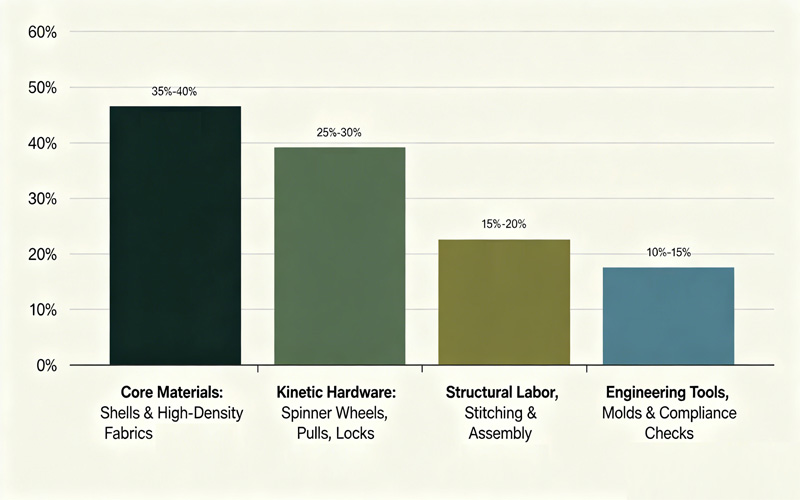 |
[ Core Materials: Shells & High-Density Fabrics (35% - 40%) ] │ [ Kinetic Hardware: Spinner Wheels, Pulls, Locks (25% - 30%) ] │ [ Structural Labor, Stitching & Assembly (15% - 20%) ] │ [ Engineering Tools, Molds & Compliance Checks (10% - 15%) ] |
The foundational allocation of any Bill of Materials (BOM) budget is dominated by core raw materials, typically commanding 35% to 40% of total production expenses. In hard-shell luggage manufacturing, this baseline cost fluctuates dramatically based on the physical chemistry of your chassis—whether utilizing cost-efficient ABS, high-grade virgin polycarbonate (PC), or premium structural aluminum alloys. Softside luggage design follows an identical cost curve, where unit pricing is dictated by textile density, specialized backing coatings, and strict durability standards like military-grade ballistic nylon or water-resistant Cordura fabrics. Moving into mechanical components, the second major cost driver is the integrated hardware system, capturing 25% to 30% of the direct manufacturing spend. Elements like 360-degree silent spinner wheels, multi-stage telescopic aluminum handles, reinforced zipper tracks, and integrated TSA-approved lock systems directly dictate product lifespan and customer satisfaction. Because these kinetic parts absorb the brunt of airport handling friction, sacrificing hardware quality to trim short-term budgets inevitably triggers catastrophic return rates, expensive warranty claims, and terminal damage to your brand reputation.
Beyond physical components, your operational capital must account for structural labor and upfront engineering. Heavy-duty stitching, internal reinforcement panels, lining installation, and precise manual assembly generally consume 15% to 20% of your manufacturing budget , shifting based on factory geography, certified social compliance levels, and automation infrastructure. Simultaneously, brands aiming to deploy distinct, proprietary hard-shell silhouettes must confront the financial realities of custom tooling and mold development. Executing specialized steel mold production for unique suitcase shapes demands heavy upfront capital. Consequently, careful production volume planning is vital; without proper amortization across optimized order quantities, unrecovered tooling fees will instantly erode your net profit margins.
To protect their bottom line, forward-thinking travel brands in 2026 are shifting their focus away from raw ex-works pricing toward comprehensive landed cost optimization. Volatile international shipping landscapes mean that packaging architecture, volumetric weight control, and container loading ratios are now primary determinants of your gross margin. Implementing nested luggage structures—where a carry-on is strategically packed inside a medium and large suitcase during transit—has shifted from an optional shipping hack to an industry standard for mitigating freight inflation. Furthermore, integrating sustainable material sourcing is evolving from an eco-friendly marketing narrative into a practical hedge against raw material volatility. Leveraging recycled polycarbonate (rPC) compounds and certified ocean-bound plastics helps agile brands stabilize their manufacturing expenses against volatile virgin polymer pricing, while ensuring frictionless compliance with tightening environmental regulations in premium import markets.
2026 Supply Chain Macro-Trends
Macroeconomic pressures, fluctuating polymer and metal indexes, and international freight volatility continue to strain traditional, fragmented production models. Brands that rely on disjointed sourcing networks face unpredictable material inflation, inconsistent quality control, and severe supply chain delays. As a result, growing e-commerce businesses are migrating toward centralized, full-service manufacturing partnerships to achieve operational stability.
Aligning with a specialized OEM Luggage Supplier offers independent brands a highly competitive path to merge tailored brand identity with pre-engineered, structurally proven chassis platforms. This intelligent hybrid production model compresses development timelines, eliminates engineering risks, and minimizes unnecessary manufacturing overhead. Instead of absorbing massive capital expenditures on completely proprietary internal structures, brands can inject their unique design language into high-performance chassis systems by customizing surface shell textures, bespoke colorways, hardware configurations, and interior branding accents. Consequently, the global demand for experienced Custom Luggage Manufacturer partners is surging as digital-native brands look to build highly differentiated travel products rather than engaging in a race-to-the-bottom price war. Modern, flexible modular production systems now allow emerging labels to launch premium travel collections at an accelerated pace while maintaining absolute control over tooling investments.
This exact intersection of cost engineering and premium quality is where Zabaggo provides your digital flagship with a decisive operational edge. Functioning as a high-tier, professional Wholesale Suitcase Manufacturer, Zabaggo utilizes a deeply integrated supplier network and a centralized component procurement ecosystem to help independent brands significantly depress material costs without sacrificing luxury product standards. Our proprietary modular manufacturing methodology actively lowers traditional, cost-prohibitive tooling barriers—allowing your business to launch sophisticated, custom luggage lines without locking up critical capital in rigid, single-use mold development.
We believe that true manufacturing efficiency is never about chasing the lowest, most dangerous unit price; it is about maximizing long-term value across the entire product lifecycle. From comprehensive raw material verification and meticulous engineering support to high-velocity durability testing and end-to-end international logistics coordination, Zabaggo delivers a transparent, scalable manufacturing solution custom-built for the modern digital travel brand. By pairing bulletproof production quality with an agile, responsive supply chain, we empower e-commerce enterprises to scale durable, highly profitable travel collections that stand out in competitive global markets.