
How Is Luggage Made Behind the Scenes? A Deep Dive Into Industrial Suitcase Engineering
When a traveler rolls a suitcase through a busy airport terminal, few reflect on the structural mechanics, polymer chemistry, and textile engineering required to build it. To the untrained eye, two pieces of luggage might look identical on a retail display shelf; however, their real-world performance—how they handle a two-meter drop from a cargo hold or resist fabric tears after hundreds of transit cycles—is determined on the factory floor.
For travel brands, product managers, and global procurement directors, understanding modern luggage manufacturing goes far beyond basic assembly. It requires a granular look into thermal molding dynamics, stress-point reinforcement, mechanical hardware integration, and rigorous quality control protocols.
Here is an insider's step-by-step breakdown of how commercial travel gear evolves from raw polymers and high-tenacity yarns into durable, flight-ready luggage.
Step 1: Material Science & Raw Spec Engineering
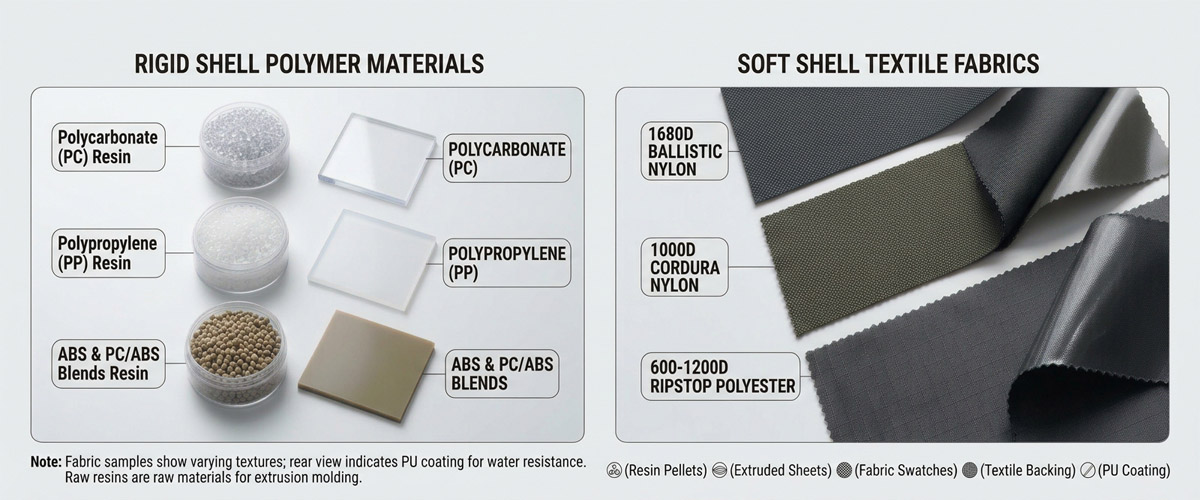
The manufacturing journey begins in the material lab long before factory machinery warms up. The structural longevity of any bag depends on matching the correct material composite with its intended travel use-case.
1. Hard-Shell Polymer Formulations
Polycarbonate (PC): The premium standard for hard-shell cases. PC exhibits high impact strength and temperature resistance. Under severe shock, PC deforms elastically to absorb kinetic energy and then rebounds to its original shape without cracking.
Polypropylene (PP): Formed via injection molding, PP offers exceptional flex fatigue resistance and extremely low density. It is ideal for ultra-lightweight travel collections.
ABS & PC/ABS Blends: ABS provides high surface hardness and scratch resistance at a cost-effective price point. Co-extruded PC/ABS sheets combine the rigid exterior of ABS with the flex impact resistance of PC.
2. Soft-Shell Technical Textiles
Soft-side luggage performance relies on structural denier count, weave density, and backing treatments. Premium luggage fabric specs typically include:
| Fabric Type | Denier & Weave | Tensile / Tear Strength | Backing & Coating | Best Application |
| Ballistic Nylon | 1680D 2x2 Basket Weave | Extreme puncture & abrasion resistance | Multi-pass Polyurethane (PU) waterproof coating | Heavy-duty business & flight crew gear |
| Cordura® Nylon | 1000D Air-Textured | High strength-to-weight ratio; anti-scuff | Water-repellent DWR + PU backing | Premium outdoor & soft luggage |
| High-Density Polyester | 600D–1200D Ripstop | Balanced cost, lightweight, strong colorfastness | PVC / EVA film lamination for shape retention | Commercial travel & promotional sets |
Step 2: Shell Forming & Automated Precision Cutting
Once raw materials pass incoming quality checks, production bifurcates into hard-shell molding lines and soft-side fabric cutting tables.
Hard-Shell Thermoforming & Trimming
Plastic resin pellets are melted and extruded into uniform sheets. In the vacuum thermoforming bay:
- Infrared Pre-heating: Polymer sheets pass under quartz heating arrays until reaching their glass transition temperature.
2. Vacuum Draw: The pliable sheet drapes over an aluminum mold. Vacuum suction rapidly removes air from beneath, molding the sheet around complex structural ribs and corner profiles.
3. 5-Axis CNC Trimming: Robotic arms route away excess perimeter plastic and cut precise mounting ports for trolley handles, wheel wells, and TSA locks.
Soft-Shell Automated Cutting
Textile bolts are spread across multi-layer cutting tables. Computer-guided laser cutters or oscillating CNC knives cut through dozens of fabric layers at once, achieving sub-millimeter precision. Stress panels are laminated with high-density EVA foam or structural polypropylene honeycomb boards to give soft-side cases crisp geometry without adding excess bulk.
Step 3: Shell Joining, Stitching & Frame Integration
This phase turns flat panels into rigid three-dimensional containers.
- Heavy-Duty Stitching: Industrial walking-foot sewing machines join fabric panels using bonded nylon threads (size T-70 or T-90). Stress junctions receive double-needle lockstitches and high-density bar-tack reinforcements.
- Set Matching: When producing a multi-piece soft shell luggage set, factory teams run synchronized production lots. This ensures exact color matching, zipper tooth alignment, and proportional scaling across 20-inch, 24-inch, and 28-inch cases.
- Perimeter Framing: Hard-shell halves are connected using puncture-resistant coil zippers or a structural aluminum-magnesium alloy frame fitted with rubber weather gaskets.
Step 4: Hardware & Mechanical Systems Fitting
A bag’s usable lifespan depends heavily on its moving parts. Accessories are installed using automated pneumatic riveting stations to prevent hardware loosening over time.
- Telescopic Trolley Systems: Multi-stage handles made from anodized aluminum tubing are anchored into internal reinforcement channels using backing plates.
2. 360-Degree Spinner Wheels: High-grade dual casters with thermoplastic polyurethane (TPU) tires are bolted to molded corner housings. TPU minimizes rolling noise while absorbing ground vibrations.
3. TSA-Approved Locks: Flush-mounted zinc-alloy combination locks are secured into pre-routed cutouts, keeping lock bodies flush with the shell profile to prevent side impacts during transit.
Step 5: Interior Lining & Storage Ergonomics
Inside the case, functional organization is added:
- Premium lining fabrics—frequently treated with anti-microbial and moisture-resistant finishes—are secured along interior walls to conceal structural hardware and rivets.
- Zippered mesh dividers, compression straps with quick-release buckles, and waterproof wet-pockets are stitched directly into load-bearing anchor points.
Step 6: Laboratory Quality Control & Stress Testing
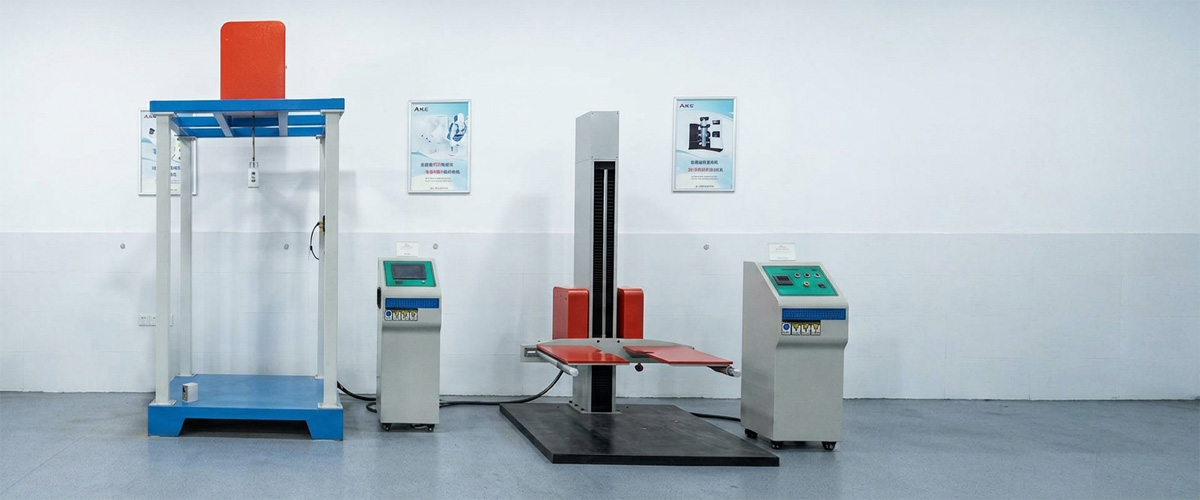
Before authorization for final packaging, finished units must clear rigorous laboratory stress testing designed to simulate years of international transit abuse.
- Sub-Zero Drop Test: Suitcases are loaded to maximum payload capacity, conditioned at -12°C for 4 hours, and dropped onto concrete from heights up to 1.5 meters to check for shell brittleness or wheel socket fractures.
- Mileage Treadmill Test: Fully loaded cases are run on motorized drum treadmills fitted with impact cleats for 30 kilometers at 4 km/h to test wheel wear and axle heat resistance.
- Jerk Endurance Test: Trolley handles are repeatedly jerked upward and downward for 3,000 to 5,000 continuous cycles under full load to evaluate rivet and handle lock durability.
Step 7: Size Categorization, Packaging & Logistics
In the final assembly step, products are organized luggage by size to meet global retail specifications:
- Carry-On (20"–21"): Designed to fit international overhead bin dimensions.
- Medium Checked (24"–25"): Optimized for 7-to-10-day trips with built-in expansion zippers.
- Large Checked (28"–30"): Built with high-capacity volume and reinforced frame support for long-haul travel.
Cases are wiped down, wrapped in protective anti-scratch polybags, fitted with molded corner guards, and packed into heavy-duty 5-ply corrugated export cartons for shipping.
Elevate Your Product Line with Zabaggo: OEM/ODM Manufacturing Excellence
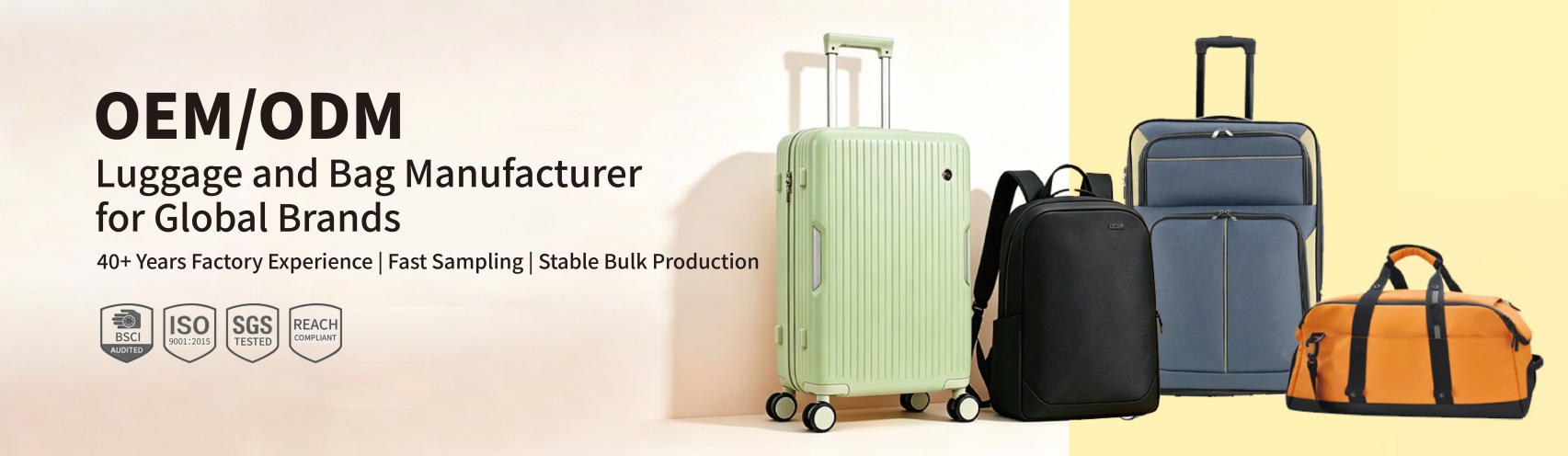
Translating complex engineering specifications into high-volume, reliable travel gear requires a manufacturing partner with deep industry roots and proven capacity. As the specialized sales platform for Zhongan Tiktech (Anhui) Co., Ltd.—a subsidiary of the Fortune Global 500 Anhui Conch Group—Zabaggo stands as a trusted leader in global luggage manufacturing.
Why Global Brands Partner with Zabaggo
- State-Owned Reliability & Scale: Operating out of a 30,000 m² modern production facility equipped with 20 automated production lines and over 600 skilled personnel, we maintain an annual turnover exceeding USD 600 million.
- Comprehensive OEM & ODM Capabilities: From custom shell mold engineering and specialized textile sourcing to TSA lock integration and custom logo badging, our engineering team tailors every detail to your brand's requirements.
- Agile Lead Times: Stay ahead of market demand with our rapid 7-day sample development and reliable 30-day bulk order delivery.
- Flexible MOQs: We support established international luggage brands and growing retail lines with scalable minimum order quantities designed for sustainable business growth.
- Global Quality Standards: Trusted by over 100 brand partners across 160 countries, our factory enforces strict ISO-compliant quality control throughout every step of production.
Looking to launch a new travel collection or streamline your current manufacturing supply chain? Contact the Zabaggo engineering team today to request a custom quote, order product samples, or schedule a virtual facility inspection.